
12 SQ-Bet sublingual lyophilisate
ITULAZAX®
A complete overview of ITULAZAX® can be found in the Summary of Product Characteristics (SmPC) which can be viewed below. A downloadable Patient Leaflet and the Prescribing Information (PI) and Adverse Event reporting can also be found on the links below.

The first and only SLIT tablet recommended by NICE for adults and children with allergic rhinitis caused by pollen from birch trees1
ITULAZAX® is a disease modifying sublingual immunotherapy tablet for patients with moderate to severe tree pollen allergic rhinitis associated with birch homologous group2 :
- Betula verrucosa (birch)
- Alnus glutinosa (alder)
- Corylus avellana (hazel)
- Carpinus betulus (hornbeam)
- Quercus alba (oak)
- Fagus sylvatica (beech)
Recommended by NICE for eligible patients with:
– clinical history of symptoms despite use of symptom-relieving medication
– a positive test of sensitisation to a member of the birch homologous group (skin prick test and/or specific IgE).
ITULUZAX® is indicated in adults and children from 5 years and over to reduce symptoms and reliance on symptomatic medication over time.2

When to start ITULAZAX®?
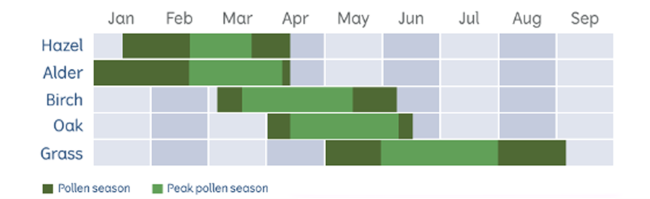
It is recommended that treatment with ITULAZAX® should be initiated outside the pollen season, ideally 16 weeks prior to the expected start of the tree pollen season and continued throughout the season.2
Tree pollen season3
Contraindications and special warnings
Asthma is a known risk factor for severe systemic allergic reactions. Patients with FEV1 <70% of a predicted value (after adequate pharmacological treatment) at the start of treatment is a contraindication for this reason. This includes patients who had uncontrolled asthma in the past 3 months prior to the start of treatment or if there has been uncontrolled asthma during this period.2
In addition, there are contraindications and special warnings in patients with active systemic autoimmune diseases (unresponsive to treatment), patients with immune dysfunctions, immunodeficiencies or immunosuppression.2
Mild to moderate local allergic reactions are expected during the first few days of ITULAZAX® treatment and usually resolve within a few weeks or months, often within one to two weeks. Reactions typically begin within 10 minutes of taking the medicine and improve within about an hour, although more severe local reactions and systemic reactions, including anaphylaxis, may occur. Oral allergy syndrome can also develop after eating certain raw fruits, vegetables, or nuts. Very common side effects include itching or irritation of the ears, mouth, throat, or tongue, mouth swelling, and altered mouth sensations. Other common effects include nasal symptoms, cough, throat or mouth discomfort, breathing or digestive problems, swelling or itching of the lips or tongue, nausea, mouth sores, hives, chest discomfort, and a sensation of something stuck in the throat. Anaphylaxis and eosinophilic oesophagitis have an unknown frequency; consult the SmPC for full details
Treatment with ITULAZAX® should be discontinued in case of severe systemic allergic reactions, severe exacerbation of asthma, severe pharyngeal oedema, difficulty swallowing, difficulty breathing, voice changes, hypotension or feeling full in the throat.2
September 2026
GB-TBL-2600038
- National Institute for Health and Care Excellence. Final Draft Guidance: Betula verrucosa(Itulazax 12 SQ-Bet) for treating moderate to severe allergic rhinitis, conjunctivitis, or both, caused by tree pollen in people 5 to 17 years [ID6537]. August 2026. Available at: https://www.nice.org.uk/guidance/ta1087
- ITULAZAX® SmPC, ITULAZAX 12 SQ-Bet – Summary of Product Characteristics (SmPC) – (emc) | 12906
- University of Worcester. (n.d.) Pollen calendar. Available at: Pollen Calendars by area – University Of Worcester (Accessed: September 2026)